Visa's moat and market leadership with increasing payment volumes and insane operating margins make it a very attractive buy.


Visa (V) $354
Industry/Sector/Type - Credit Card Processing/GARP
Biggest catalyst for the stock - Steady consumer spending - ironically, inflation helps VISA, because it gets a percentage of payment volumes as a network processor, without the commensurate increase in operating costs. And as the largest player by far, Visa benefits the most from higher payment volume.
I believe it is worth buying on declines, or accumulating in tranches, averaging it down - this can give 8-10% returns for the long-term.
Positives
Visa is the gold standard for credit card payment processing and should continue to benefit from the long term higher non-cash payment. It is the market leader with $46Bn in annual revenue with closest competitor Mastercard (MA) 25% lower at $37Bn. There are just three other major competitors, Mastercard, Discover and American Express.
Credit card processors, process payments in real time - they are the backbone and don't carry credit risk, that is the bank or lender's problem, network payment processors as they are called are content to get recurring, stable fees. Why does inflation help? Visa benefits from inflation, as inflation leads to higher processing volumes, and revenue, but not significantly higher operational expenses due to the company's lean fixed operational structure. Visa has an operating margin of 65%!
It could goose growth with additional services like fraud-detection, and adoption of stablecoin infrastructure, further deepening the moat.
It is very shareholder friendly. Visa has annually decreased share count by 3% and increased dividends by 5% in the past decade - it’s a huge favorite for dividend stock pickers and highly unlikely to be dislodged from its high perch of being an income compounder and losing its premium multiple. I can’t imagine the stock quoting anything less than 25x earnings per share. Even consumer staple stalwarts like Coca-Cola (KO) and Procter & Gamble (PG) trade at around 22x to 24x earnings with slower mid-single-digit growth rates and lower operating margins. Visa's higher 12-13% earnings growth rate should support a relatively higher multiple. Its most direct comparable in Mastercard (MA) trades at a premium at 33x earnings.
I would believe that Visa can return 8-10% a year for the next decade, and more if the economy stays robust. This morning we got a preliminary quarterly GDP read of 4.3%
Challenges
The government tends to breathe down the neck on credit card companies to keep fees down and there is the possibility of pricing competition from Mastercard (MA) and others. But it hasn't happened when the industry is an oligopoly with strong barriers to entry and entrenched players. Blockchain can disrupt the credit card payment ecosystem it but hasn't in the past decade.
Visa stock is not particularly cheap and can slump in a slowdown due to a dip in consumer spending. While customers migrate to BNPL systems like Klarna andAffirm - most BNPL users still link a Debit or Credit Card to their account to handle the four installments. However, this could reduce volumes in the future by using ACH or direct bank processing.
Return
1 Year 11% 5 Year 71% 10 Year 354% - the epitome of a steady GARP.
Valuation
Three years forward.
P/S 15 Sales Growth 10% P/S Growth 1.5
P/E 27 Earnings Growth 13% PEG 2.1 - Very reasonable
Cash Flow Margin 57%
Operating Margin 65%
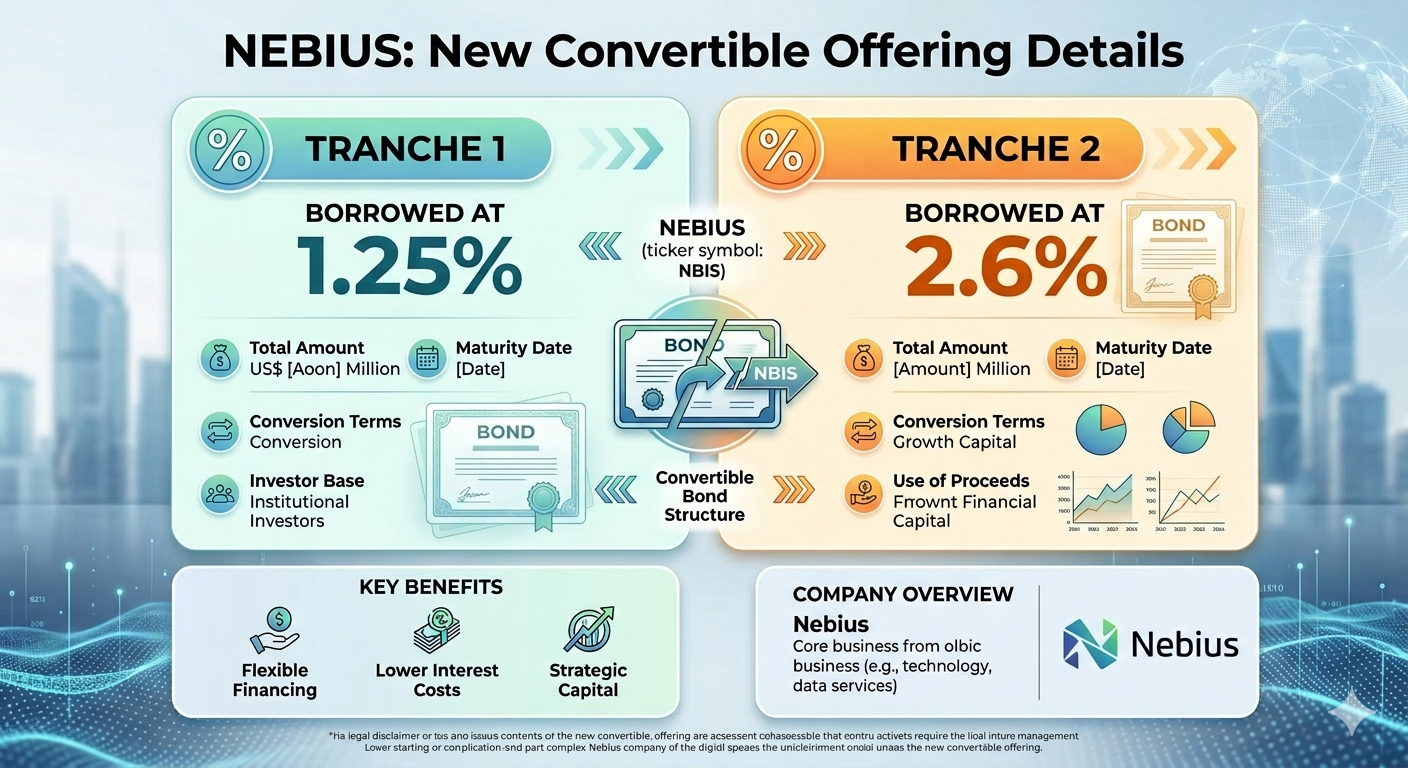
Nebius' masterly execution as an integrated neocloud player allows it to borrow at very cheap interest rates with very little shareholder dilution.