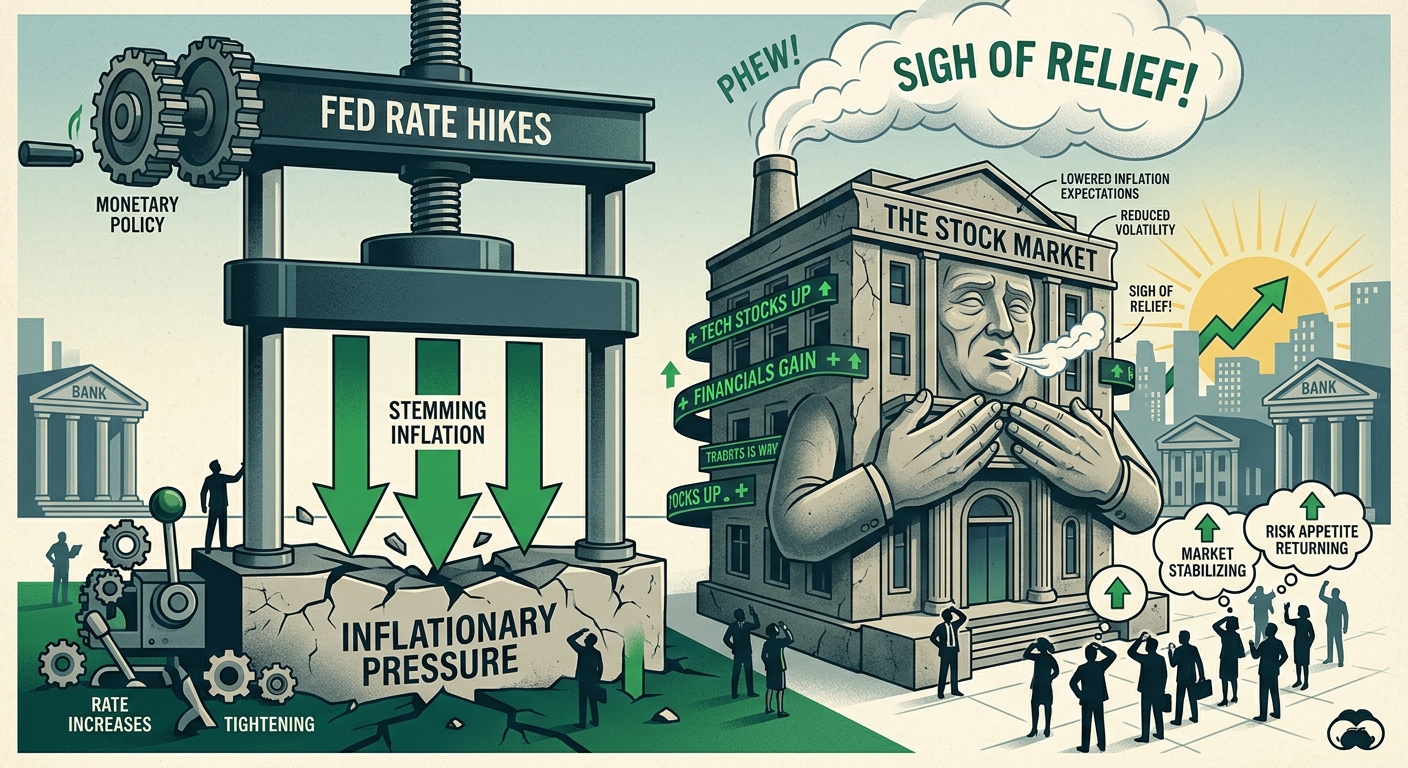
This week is bullish for the markets with 5 out of 7 M-7 stocks reporting, and the FOMC meeting to reduced interest rates by 0.25%.


A return to records
Unlike the previous week, which saw choppy trading due to a temper tantrum and some bad news from commercial banks struggling to write off a few bad loans, this week saw the markets returning to new records.
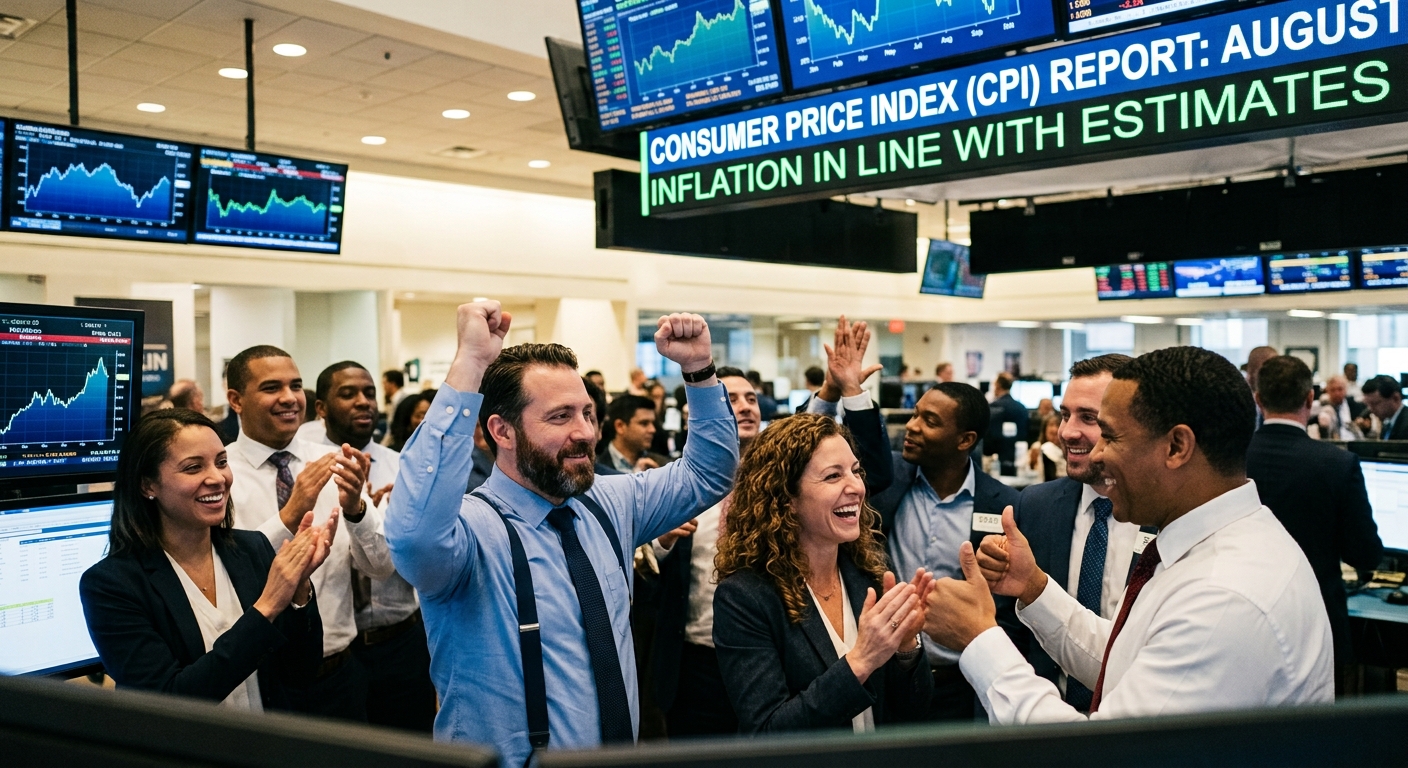
Four out of five days were positive with the S&P 500 rising 2% from 6,664 to 6,791 (a new high) on the back of an apparent trade resolution with China, a benign CPI report, decent earnings and a rebound in tech and data stocks led by the M-7.
The S&P 500 closed at a record new high at 6,875 and the week is looking very promising with a lot of positive factors ahead such as:
Let’s look at the FOMC meeting first:
A quarter-point cut is likely assured for Wednesday, but the relatively benign CPI report now makes a the odds for a December 25 basis point more than 80%. The Fed’s focus is saving the economy by protecting employment with inflation taking a back seat. The priority is to cut to protect the labor market and preempt job losses. I also expect Chair Powell to opine on reducing quantitative tightening even further. Unfortunately policy makers will not get labor reports from the BLS and may instead have to rely on ADP’s report due next week, which has shown private hiring falling in 3 of the past 4 months.
Will it boost the market further? - I believe 50 basis point cuts are already priced in, and the movement from the 10 year treasury, which is not falling further and steadying around 4% after dropping to 3.94% suggests likewise.
[caption id="attachment_6021" align="alignnone" width="657"] Amazon Segment Revenue[/caption]
I think the market is not valuing Amazon enough, at least from the sum of its parts.
AWS is the market leader by far, with about $122Bn in sales this year, growing at 16-17% and deserving a 10x multiple given its growth, high operating margins and market leadership; this alone is worth $1.2Trn.
Amazon’s advertising business is also highly profitable, and has grown to $60Bn, that should fetch 8x sales or $480Bn.
Prime with about 230Mn subscribers has about $44Bn in annual sales should also get a conservative 6x sales for $264Bn,
Which means that at today’s market cap of $2.39Trn we’re getting the rest of $483Bn in sales for $426Bn, a multiple of less than 1.
This doesn’t even take into account its robotics strength or AI investments.
Alphabet too sells at a modest/conservative 24x earnings with 14% growth and 7x sales with 11% growth. It’s rare for a $395Bn company to grow that fast.
These are low for a market leader that is constantly innovating across the board, with an operating margin of 32%.
It’s also financing all its data center Capex with cash, investing in TPUs and ASICs to reduce its dependency on Nvidia. It has solid growth in Gemini subscribers to counter ChatGPT, Perplixity and Claude, and is the front runner in robotaxis by a huge margin. The justice department, anti-trust cloud has lifted and regardless of Q3 earnings this remains a buy on declines.
Markets expect about $2.26 and $100Bn in Q3 earnings and sales respectively, growing at 7% and 13%. It normally surprises on the upside. Management should provide color on Capex plans and other investments such as Quantum computing and any other growth areas.
Google is also appealing because it’s a less risky play in an overbought environment with still enough growth momentum - a sweet spot.
The markets expect Microsoft to earn about 3.66 per share and $75Bn in revenues for the Sep quarter, growing 11% and 15% respectively. This year’s earnings growth has been a little lower than their average. Based on a 3 year forecast MSFT should grow earnings at around 17%, and revenue about 14-15%. Most of the growth is already reflected in its valuation of 33x earnings and 12 sales, but it has the best operating margins with 45% of revenue and also finances its Capex with over $100Bn in annual cash flow generation. Microsoft also remains a buy on declines with pole positions in AI, Azure cloud, and personal computing.
AI adoption remains the key catalyst, with 80% of the Fortune 500 using Azure AI Foundry and a 7x increase in tokens served by the Azure Foundry API in FY25.
Q3 Estimates: EPS at $6.67 per share at 11% growth and $49Bn in sales at 21% growth. Also likely to beat.
Like the other M-7s, earnings are not a big focus, revenue growth and AI development with heavy Capex is where Meta wants to clearly grow. I think this approach is necessary, they have the cash with 42% operating margins and even higher operating cash margins with all that depreciation, massive competitive advantages in Facebook, Instagram and WhatsApp.
Meta is also reasonably priced at 24x earnings with 13% growth and 8x sales with 15% growth. It has claimed a huge revenue boost with better AI based ad targeting, which is clearly helping them.
Apple (AAPL)
Is the slowest grower but a market leader and blue chip, a must-have in the portfolio as a buy and hold.
Apple had a lot of catching up to do in AI and seems to be finally doing it. CEO Tim Cook announced that Apple has started shipping its custom servers to its data centers to power Private cloud compute and Apple intelligence, that they are running ahead of schedule at their facility in Houston.
The delay in the “more intelligent and personal” Siri, is primarily due to Apple's decision to use its own servers to host Private Cloud Compute, because the new more intelligent Siri needs greater compute capability than Apple’s 2024 generation of data center servers.
Apple’s decision to use Apple Silicon for its data centers is based on greater efficiency and security , needing custom Silicon and servers for maximum security compared to off-the-shelf solutions. Apple Silicon is probably the most efficient compute platform available for conventional server applications and for AI. Apple being ahead of schedule for large scale production and delivery of the servers is great news.
Apple’s always going to be priced at a premium - 32x earnings growing at just 9% and 9x sales growing at just 6% but the premium is for the brand and lower risk, defensive buy and hold profile, which I believe is worth paying for.