Housing falls of the cliff with sellers outnumbering buyers by 46%. Housing will not improve till mortgage rates come down, and that looks impossible in 2026.

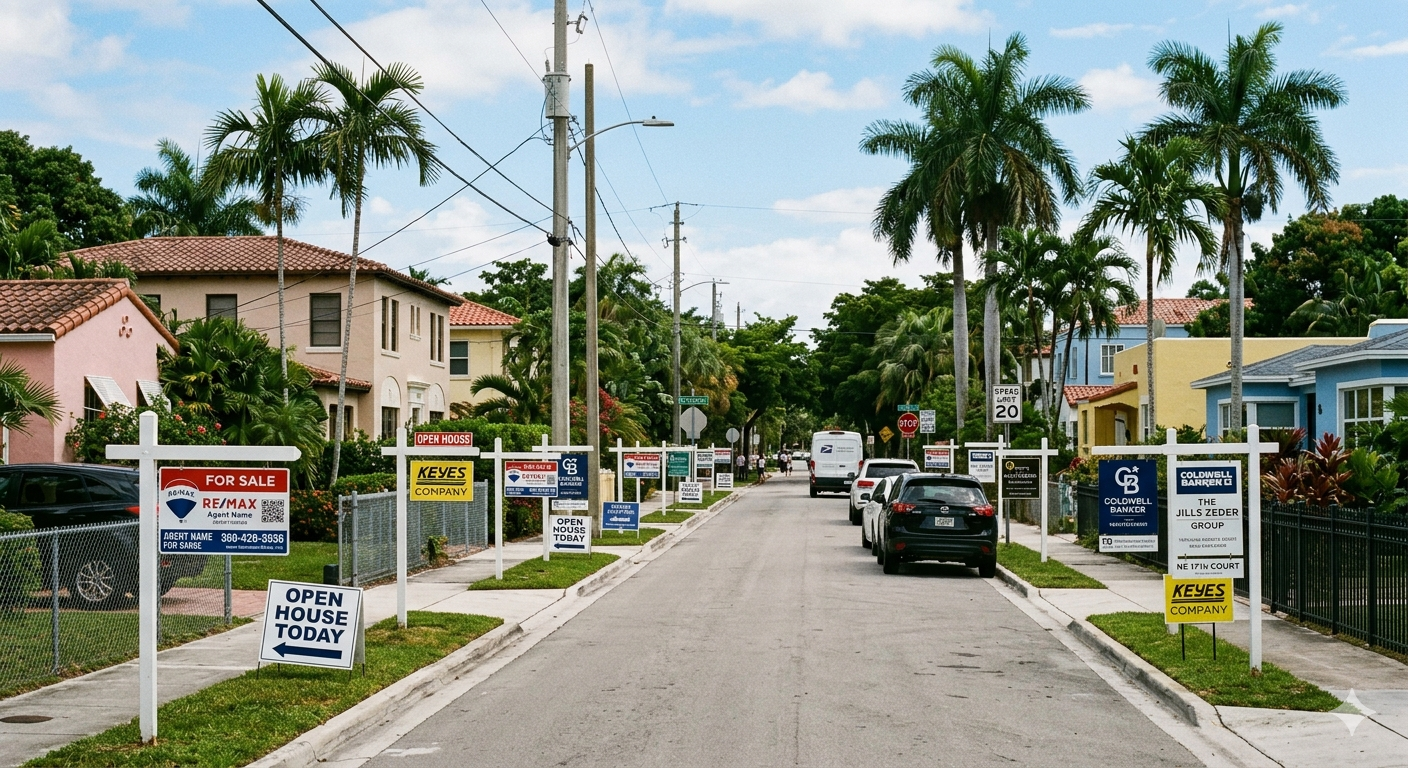
Redfin's latest missive paints a stark picture of the U.S. housing market with a record 630,000 more sellers than buyers in February. This is an unprecedented 46% difference, basically 1.5 sellers to 1 buyer, and from appearances only likely to get worse, after the gap widened from 30% a year ago, when the hope of lower interest rates kept the market afloat. At least buyers could hope for a quick refinancing, which now looks close to impossible with a raging war and high inflation. As od February the imbalance was 1.99Mn sellers to 1.36Mn buyers down 2.4% MoM.
Redfin politely describes any market with more than 10% excess sellers as a buyer’s market, a threshold the nation has exceeded since May 2024, and clearly in the disaster market classification.
“We’re seeing a lot more inventory on the market compared to the past two years because the mortgage rate lock-in effect is easing and there’s a lot of new construction,” said Justin Gomez, a Redfin Premier real estate agent in Omaha, Neb. “Two years ago, people were offering $15,000 over the asking price just to get a home, with multiple offers everywhere.”
Buyers naturally dictate prices with this imbalance, often using lower prices to mitigate high mortgage costs. Often they move to the sidelines, increasing the number of days houses are still on the market and also increasing new home discounts. I don't believe this will change till interest rates come down, and with a raging war and inflation it looks impossible.
A few spots in the Northeast such as Newark, N.J, Nassau, Long Island NY, Montgomery county, PA, Milwaukee and New Brunswick, NJ were cited by Redin having fewer sellers than buyers.
Sellers abound in Southern metros with Miami, Nashville and Austin leading the imbalances with 163%, 120% and Austin 112% respectively - these were massive growth towns a few years back but over building, fewer job opportunities and high mortgage costs have depressed demand. A couple that were house hunting in Dallas reported a 25% drop in price, and are still negotiating seeing the wind change direction. The pandemic-era building boom in the suburbs led to overpricing, which has eventually led to bloated inventory.
This chart tells it all:
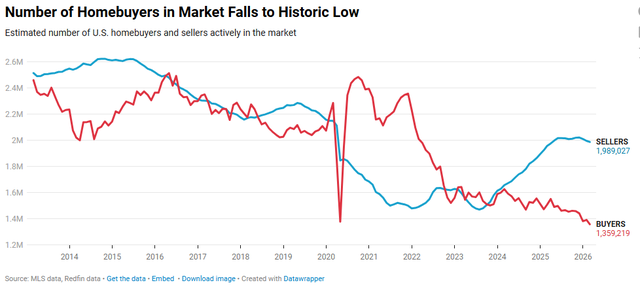
I don't expect housing to recover in 2026, unless there is a sea change in interest rates, and this increasingly looking worse.