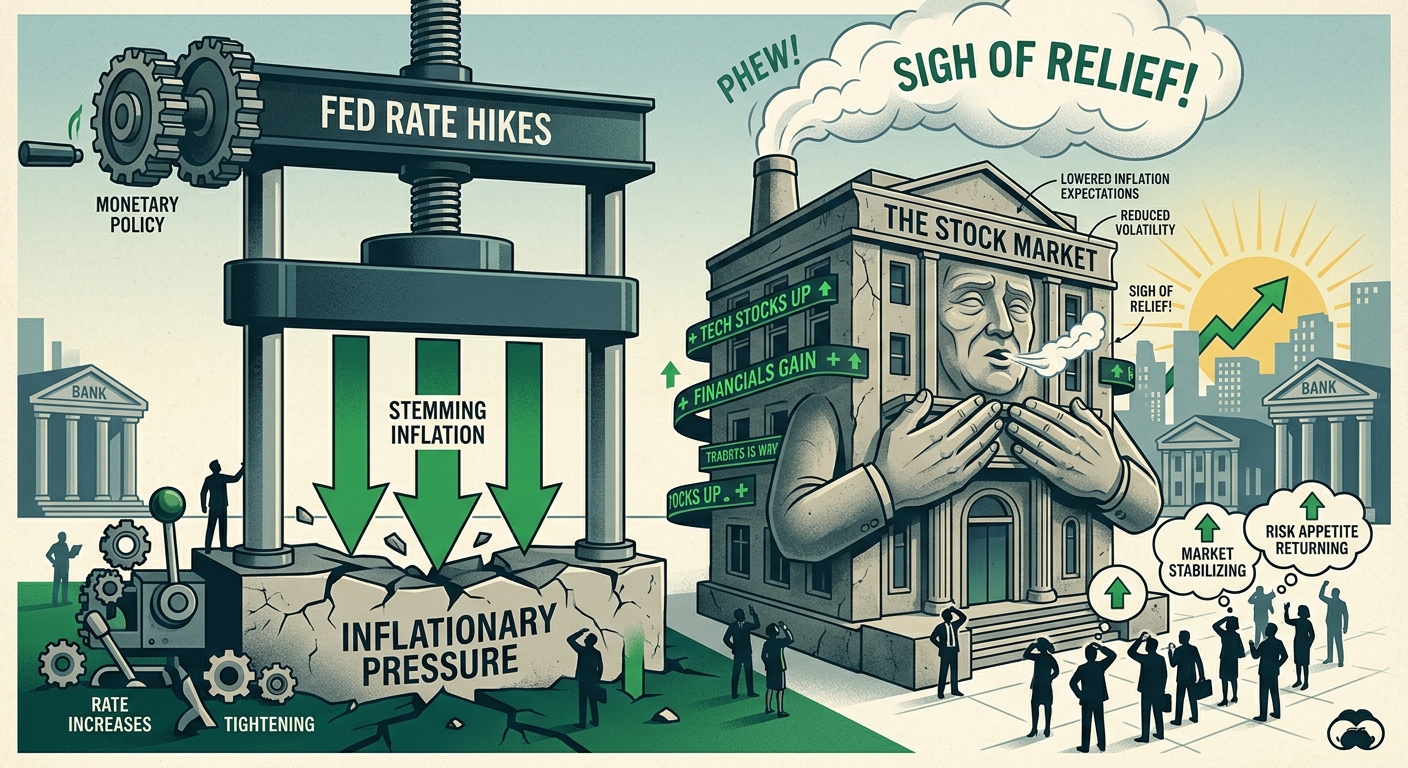
The 7% pullback was mainly on account of PNL profit protection to collect healthy bonuses on Wall Street; the markets should bounce back.


[caption id="attachment_6340" align="alignnone" width="429"] S&P_500_11.14.2025_To_11.21.2025[/caption]
As of Friday 11/21st, the S&P 500 was 4.95% and the Nasdaq Composite, 7.25% lower than their all time highs.
The notable event of the week was Nvidia’s quarterly earnings on 11/19, which were quite phenomenal, with strong beats on earnings, revenues; and much higher guidance and stronger margins in the next quarter and for the Financial Year ending in Jan 2026. And the markets did respond well, Nvidia went up 5% and the Nasdaq Composite up over 2% in the morning, but reversed after an hour with an epic fail, ending lower by 2.15%. A stunning reversal, spooking every corner of the market, with many analysts struggling for reasons. To be sure we’ve had a rough 3 weeks prior to Nvidia’s earnings but this was supposed to be the catalyst for a bounceback and reaffirmation in AI, but it fell apart, perhaps the talk about an AI bubble was too strong for skittish traders.
I had posted on Nvidia’s earnings last week, so just summarizing a few important points here. In my opinion, the $4.5Trn market leader is very reasonably priced at 27x forward earnings.
Nvidia is firing on all cylinders and extremely confident of demand and revenue.
Analysts expect FY2027 adjusted EPS to grow 50% YoY to $6.83 and 27% YoY to $8.65 in FY2028, which places Nvidia at just 27x forward earnings.
The company’s strong revenue growth dispelled fears of an AI Bubble. Nvidia’s CEO Jensen Huang said, “Blackwell sales are off the charts, and cloud GPUs are sold out. ”Blackwell Ultra is ramping on all categories, with Blackwell total revenues already over $100Bn so far.
FY- 2027 data center revenue could be $300 to $320Bn, versus estimates for around $270Bn.
During Nvidia's GTC in Oct, management had estimated total committed revenue of $500Bn from Blackwell and Vera Rubin and now it believes it can exceed that.
Management believes that global and sovereign demand offer de-risking and diversification from US big tech and hyper-scalers, which helps insulate Nvidia should one customer or region slow their spending.
Regarding Nvidia’s supposedly “circular” investments, Jensen maintained that multiple countries will fund their own infrastructure within multiple industries, adding that most of the world's industries haven't really engaged in agentic, and physical AI yet.
I had compiled a list of the major reasons below for our Thursday webinar, but the one that seems to be the most likely, and influential explanation is PNL protection.
There has been profit taking (PNL) to close the year out at a good profit to ensure good bonuses.
An overpriced AI sector with bubble fears won't get erased by one excellent report.
Equity sales to pay for crypto losses.
A bear trap, catching those who bought post Nvidia results.
The collapse of The Japanese Yen/US Dollar carry trade.
Fully invested institutional funds with only 3.7% in cash - not enough for dip buying.
A spike in volatility with the VIX crossing 28, leading computerized algo trading to unwind.
Nomura on PNL: "Charlie McElligot, the head of strategy at Nomura securities had this to say about the two week 7% drop in the Nasdaq Composite. “Relax, it’s just PNL protection.” He cited indigestion in US equities, where a lot of the meme “stuff” is suddenly struggling amid daily (and by now a bit tiresome) AI bubble warnings. There’s been “no wholesale shift in macro regime inputs at this time,” McElligot wrote, describing a “bumpy” ride as investors take profits on this year’s winners. This is just what happens when year-end PNL (i.e. compensation) ‘lock-in’ turns sloppy."
This is McElligot’s take on the outlook for 2026: "Hence, despite the risk that a combo of 1) wider credit spreads led by mega-cap tech debt issuance and 2) lower flow of corporate buyback demand (due to Free Cash Flow burn from the hyper-scalers) could act as a major thematic inflection and [a] potential headwind for stocks in 2026 — as well as 3) modest investor ‘hawkish pause’ disappointment with the current Fed messaging into the December FOMC meeting — I’d still say the net 2026 outlook remains tilted bullish for most institutional investors with regard to 1) positive trends on corporate EPS / revenue growth (especially the profitability of hyper-scalers and perception they’ll be able to keep pace with the infrastructure buildout and energy bottleneck issues [and the] view of AI as still ‘early stage’ on unprecedented demand for data center space and GPUs), 2) the perception of US economic ‘Goldilocks’ in the year ahead as inflation continues to normalize."
This is also Mike Wilson's view.
Thanks to the relatively high level of cash of 17%, some hedges, and focus on more high quality stocks like the M-7, we didn’t get clobbered too badly with a drop of about 3%, on Thursday, the day of the stunning 4.5% reversal from the high to the low, which is relatively good for a tech focused portfolio. The Nasdaq at the day’s low had lost 8.5% from its high, the S&P 500, about 6%, and our portfolio 8.9% from its peak, so that is good from a risk mitigation standpoint. The portfolio’s high quality stocks, (Alphabet and Nvidia make up 21%, Amazon, Apple, Meta, Broadcom, JP Morgan, Berkshire Hathaway and two S&P 500 indices comprise another 15%, thus ensuring some stability and defense.)
I had posted an article titled Nvidia gets a massive upgrade from Beth Kindig summarizing her bold report claiming that Nvidia could get to a $20Trn market cap by 2030. That may be a tall claim but Kindig spotted Nvidia about a decade back and has backed up the research with her firm’s investments and her record in AI and AI infrastructure is one of the best in the industry.
A few key points:
Nvidia needs to grow revenue by 36% per year between now and 2030 to $900Bn, valued at 22x sales = $19.8Trn
There are several third-party forecasts, besides hyper-scaler spending on the total market size, which indicate that this revenue is possible if Nvidia gets 60% of the hardware spending.
Their 18-month accelerator product cadence, connectivity strengths and CUDA moat also indicate that they would hold at least 60% market share.
To be sure, Kindig's reasoning is defensible - there is a tremendous amount of due diligence and exhaustive research, plus their firm's money is on the line.
However, these are the challenges we should be aware of:
Who’s got the power? Two quarters back, Microsoft had GPUs sitting idle waiting for power, which is at a massive shortage. Coreweave lost a quarter because a supplier was delayed. Nebius turned away Meta because it did not have enough capacity. The seismic demand coupled with power shortages could become Nvidia’s biggest weakness.
Debt: We’ve seen some massive numbers in trillions thrown about – remember these necessitate capital investments and debt. The huge amount of debt capex should worry investors.
Product obsolescence: Nvidia’s own product superiority with an 18-month cadence renders previous generation GPUs weaker, which brings us to Michael Burry’s question – are CSPs and GPU buyers depreciating their assets properly?
Show me the money: CSPs, foundational models, and other enterprise software customers will need to show clear revenue or profit benefits within the next 1-2 years…Morgan Stanley had an estimate of $650Bn in revenue in 2030 to justify this spending.
A bumpy ride: I think the growth is achievable but the trajectory of Nvidia’s stock will be beset by lumpiness, quarterly disappointments and volatility, especially when maybe 25% of the economy is riding on it in 2030, it will always, almost by definition be a bumpy road.
My estimates are lower than Kindig’s: I expect revenue to be around $600Bn in Calendar Year 2030 with a P/S ratio of 18, calling for a market cap of $10.8Trn, which still affords an annualized return of 20% per year. I own shares and plan to hold my investments for a minimum 5 year period and may add more on declines.
Overall, this is a healthy pullback we should close the year stronger, the AI bull case remains intact.