Too much debt is not good for the stock market, growth stocks and bond markets: Stocks don’t typically crash until bond moves get more violent, but is that a good thing? We should not be getting complacent.

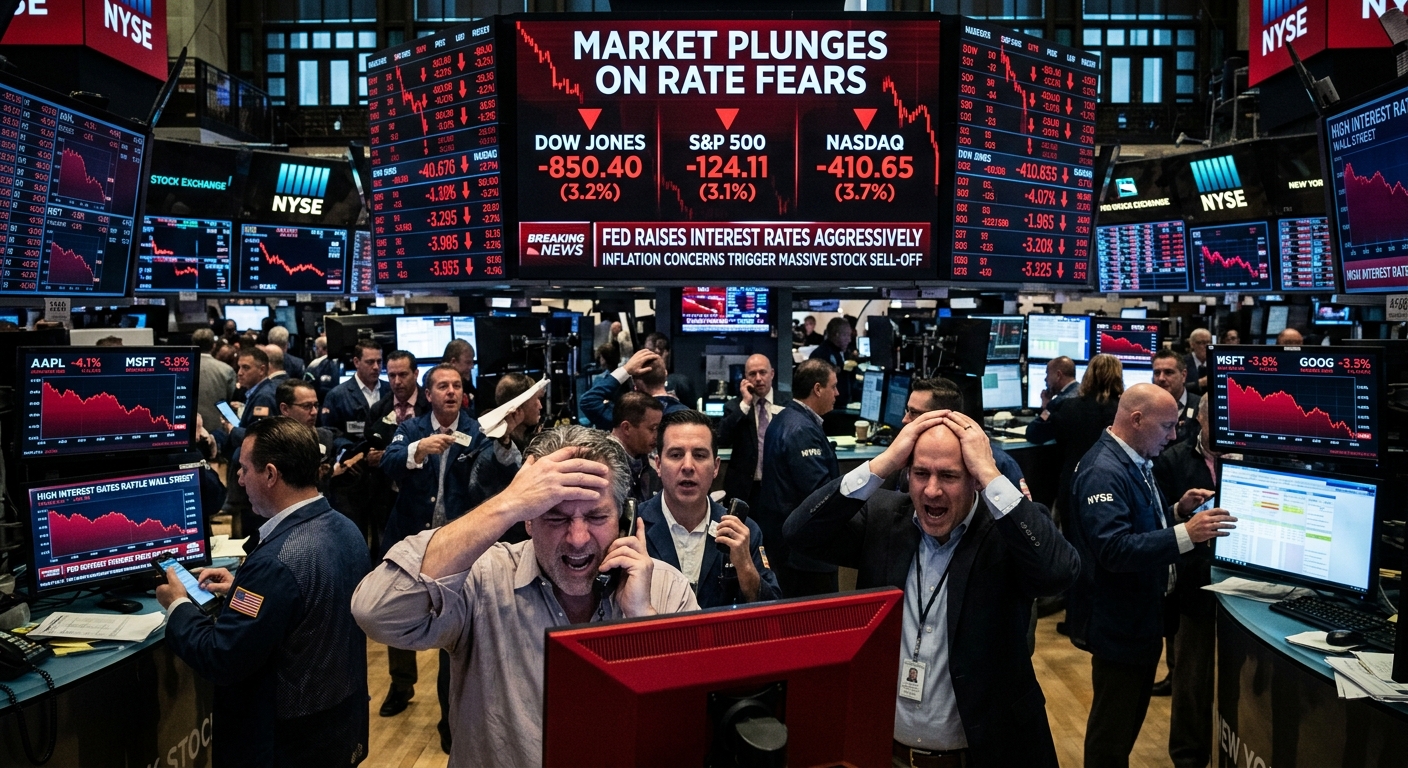
Too much debt is not good for the stock market, growth stocks and bond markets:
Rising bond yields, caused by the need for $2 to $3Tr of more debt for data center buildouts over the next two years and a profligate US government, could derail the market over the next few months. I am hoping for a bounce from strong Nvidia earnings on Wednesday, August 26th, after which I will look to sell some stocks, raise cash, and derisk the portfolio. I have far too many growth stocks that lose value fast with rising interest rates.
Don’t get complacent: Even though the weekly drop didn’t reflect panic, it wasn’t reassuring in any way. Investors' insouciance towards rising bond yields, perhaps due to a lack of volatility, could be the proverbial calm before the storm, and I do hope to get ahead of it. Stocks don’t typically crash until bond moves get more violent, but is that a good thing? Plus, we do realize that the 30-year yield has climbed from 4.7% in March to over 5.2% today. Should that not create some fierce competition for investor assets? Why take on all the risk of holding equities when you can get 5.2% “risk-free”? For starters, it is not entirely risk-free. When people assume bonds are low-risk or risk-free, they should factor in several negatives. The U.S. national debt crossed above $40 trillion this week, and a craven legislature and executive will not raise taxes or bring down spending.The only way we’ve ever paid off this kind of debt is to inflate our way out, thus it’s going to be a long time until we see low-single-digit inflation numbers again. Investors who hold a 30-year bond to maturity don’t have a credit risk and are assured of the might of the US government to get repaid, but the real question is to assess the risk of how much the dollars they get in the 2050s will be worth - that is the risk. (One doesn’t need to hold a bond to maturity to be punished by inflation, of course; but try selling a bond at the same price you bought it at, in an inflationary environment. When investors fear a) inflation will rise, b) a government that is not controlling a deficit c) massive borrowing for data centers - they demand more yield for locking up their money, pushing down prices - and we’re seeing that in spades, so again government securities are not entirely risk free. If you have a couple years of double-digit inflation and rising yields, it trashes a bond portfolio, and we’ve seen that happen again and again. So reflect a little before defining long-dated government bonds as totally risk-free.
Inflation isn’t great for equity investors, either, but at least we get to participate in the profits.
Treasury buybacks a sign of panic?:
Treasury secretary Scott Bessant’s gamble to shore up long dated treasury bonds could be a sign of panic: On 08/19 The US treasury went on a bond buying spree, to shore up the long-ended 10 year and 30 year treasury bond market. Initially that did bring down yields from 5.32% to 5.17% on the 30-year. But by Friday, it gave up most of its gains, closing at 5.28%.
Bessant’s move was derided by plenty of professional money managers as a sign of panic and a band-aid at best. National is a far more serious issue and buying bonds is no way to stop yields from rising.
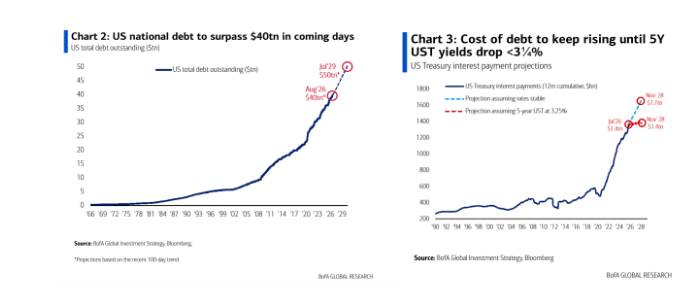
At the current run rate, total outstanding public debt will be $50 trillion three summers from now. If rates don’t fall ~100bps or so, the cost to service that debt over a year will reach $1.7 trillion by the next election. As debt servicing costs rise, comprising a higher and higher share of overall spending, investors demand even higher yields (more compensation for the inherent risk), pushing the interest bill higher still and so on.
For the most part of 2026, we ignored macroeconomic factors and focused on the AI boom, and rightly, I may add. But this is getting contagious, and the fear is spreading beyond the bond market. You can see it in the weak dollar, and higher gold prices. The U.S. Dollar Index DXY -0.06%, which measures the dollar against a basket of other currencies, fell to a three-month low. Gold just notched its fifth straight weekly gain. And for investors like me which have a large exposure to growth stocks, I’ve seen the portfolio drop over 5% in the past week. Some of my AI infrastructure stocks have already dropped 15% from their recent highs.
I plan to raise cash.