Celestica should continue to grow with better prices with data center growth, making integrated racks to beat white box competition

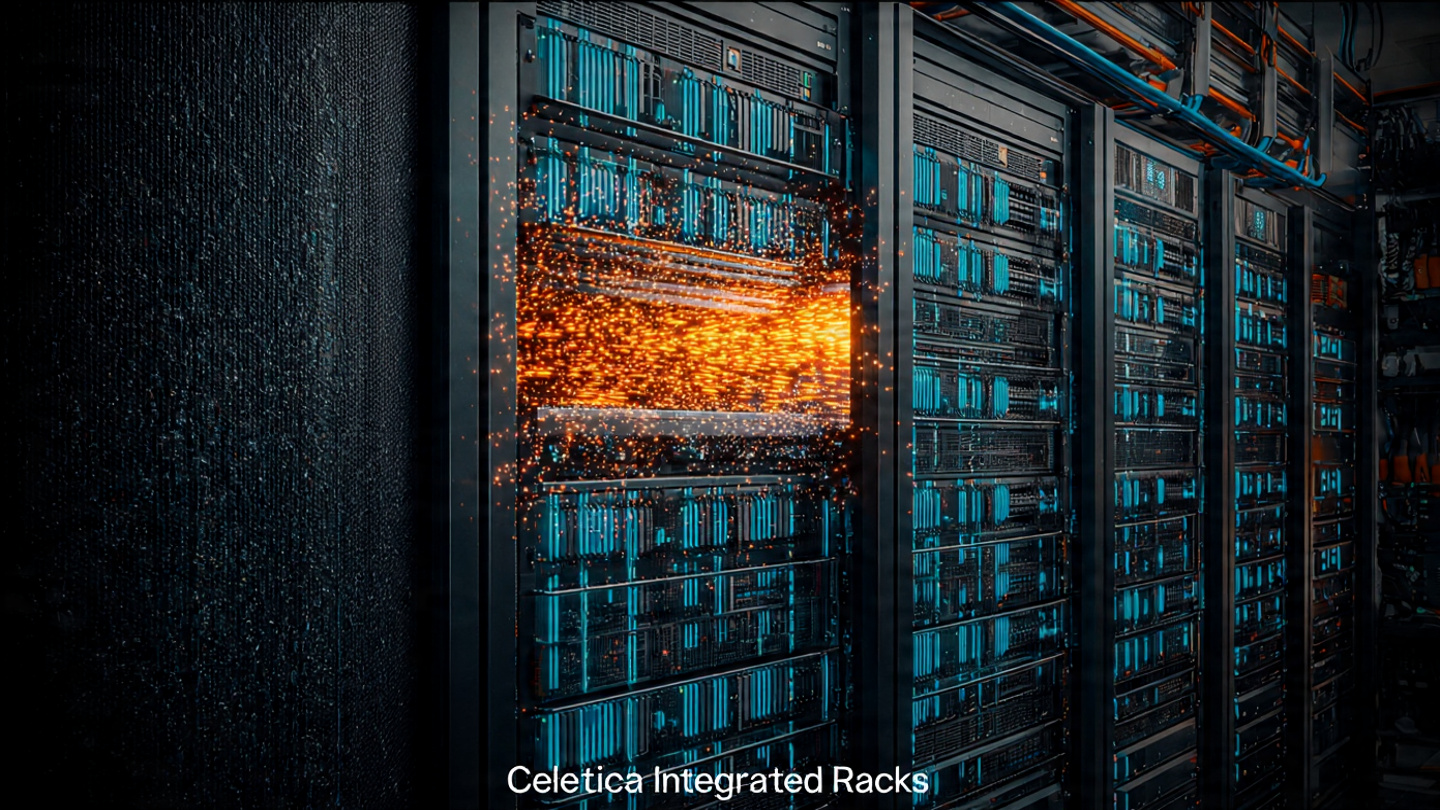
Industry/Sector/Type - Ethernet Switches, EMS (Electronics Manufacturing), Rack-scale integrated systems for data centers.
Biggest catalyst for the stock - Continued growth in data centers for recurring, sustainable growth and improved margins.
I like the company but the stock price return of 225% in 2025 leaves little room for more upside, though it has fallen 25% from its high of 363 this year. It would be worth waiting for a better price to enter. It can be bought on declines.
From an excellent article in Seeking Alpha, which suggests Celestica can differentiate its product as an integrated supplier, against commodity white box suppliers competing on price. With increased demand for power density, Celestica’s integrated racks can create a switching cost stickiness and competitive advantage.
Against that background, Celestica’s advantage is focus and place in the stack. The DS6000 Series effectively puts it at a critical choke point in AI Ethernet fabrics, where 1.6T of bandwidth and liquid cooling are becoming table stakes in AI fabrics. The rack organization can then pull through Celestica’s own platforms or third-party solutions into fully validated racks, with the leverage of, for example, its rack configurator and a regional network of integration sites. In an industry racing to bag capacity, that conjunction of product and integration in the geographies that matter is a sustainable advantage. Two structural constraints define AI facilities today. The first is that thermal and power densities are increasing at a rapid rate. There are already conversations among vendors about the cost of cooling BOMs (bill-of-materials) for Blackwell-class systems, and the move to high-wattage GPUs will likely add to this trend. The second reality is that there are true grid constraints in North America and EMEA, so AI/ML system operators are being pushed to quickly deploy pre-engineered solutions. Integrators that can deliver fully validated racks with known power and cooling characteristics will be the fastest route to usable capacity. In addition, these constraints also create stickiness. Swapping suppliers in mid-program, when you have been co-designing for your specific liquid loops, bus bars, and rack envelopes, is both time-consuming and risky. For this reason, hyperscalers will preferentially select partners who can shorten the time-to-value and reduce the risk associated with deploying at scale. These are the exact features that Celestica's documentation emphasizes, such as testing of racks, field service, and a regionally based presence that shortens logistics cycle times.
1 Year 225% 5 Year 3,667% 10 Year 2,347%
P/S Sales Growth 28% P/S Growth Ratio 0.7 Very Low (That's because of the low margins)
P/E 34 Earnings Growth 34% PEG 1 Also Low, because it never grew that fast historically.
Cash Flow Margin 6-7%
Operating Margin 8-10%